
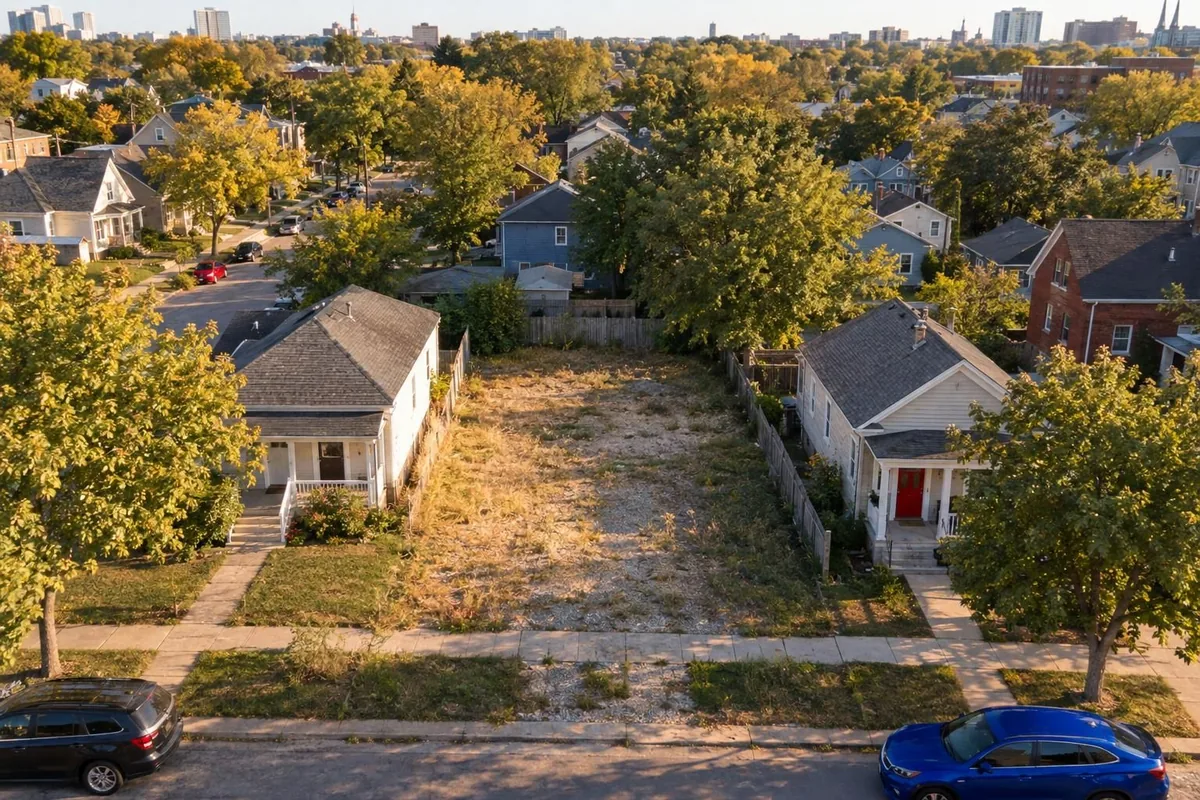
America has a housing problem. Not a subtle one, either. Across the country, demand for homes outpaces supply, rents climb, and families find themselves priced out of the very communities where they work. Max Howell has spent his career in the middle of that tension, developing affordable and market-rate housing across Kansas and Missouri, and his perspective on what actually moves the needle is worth hearing.
His book, Falling Sword: Lessons Learned in Development, documents the hard-won lessons from years of doing this work on the ground. The core argument threading through Max Howell's career and his writing is straightforward: the land is already there. The infrastructure already exists. What's missing is the will, the expertise, and the financial tools to put them to use.
What the Housing Crisis Actually Looks Like on the Ground
The housing crisis is not uniform. It plays out differently in a mid-sized Midwestern city than it does on a coastal metro. In markets across KS and Missouri, Max Howell has seen firsthand how aging housing stock, deferred maintenance, and population shifts leave pockets of urban land sitting underused while families struggle to find quality, affordable places to live.
The shortage is not just about raw numbers of units. It is about the right units in the right places, built to standards that serve residents well over the long term. Max Howell's work consistently returns to that principle: housing that is built well, financed smartly, and located where people already have roots in their community.
Urban Infill: Building Where the City Already Is
Urban infill new construction means building on vacant, underused, or previously developed land within an existing urban area rather than pushing outward into undeveloped land at the edges of a city. For Max Howell, this approach is not just philosophically appealing. It is practically smart.
Infill sites already have roads, utilities, transit access, and community infrastructure nearby. That means lower infrastructure costs compared to greenfield development at the suburban fringe. It also means new residents connect to existing jobs, services, and community resources from day one.
In cities across KS and the broader Midwest, urban infill offers an especially compelling path forward. Many urban neighborhoods have parcels that have sat vacant for decades following disinvestment cycles. Those parcels represent real opportunity for developers willing to work through the complexity of brownfield remediation, historic structures, and complicated land assembly.
Why Infill Is Harder Than It Looks
Max Howell would be the first to tell you that urban infill is not the easy button. The title of his book, Falling Sword, is not accidental. Infill development comes with genuine complexity: tangled titles, environmental assessments, community input processes, tight financing stacks, and the need to work with multiple public and private partners simultaneously.
That complexity is precisely why experienced developers matter. The skills required to close a tax-credit affordable housing deal on an infill site in an urban KS neighborhood are very different from those needed to build a subdivision on raw land. Max Howell built his practice around mastering those skills, using tools like Low-Income Housing Tax Credits, HUD financing, and HOME funds to make projects pencil in markets where conventional financing alone cannot do the job.
Affordable Housing Development as a Crisis Response
One of Max Howell's clearest contributions to addressing the housing shortage is his focus on affordable and senior housing developed with layered public financing. Multifamily infill projects using tax-credit financing can deliver quality units at rents accessible to working families, often in locations with good access to employment and services.
This is not charity work dressed up as development. It is a disciplined use of available financing tools to produce housing the market underprovides on its own. Max Howell's team has worked through that financing complexity on projects across Missouri and Kansas, learning where the leverage points are and where the pitfalls tend to appear.
For communities grappling with the housing crisis, that kind of expertise is a resource. A developer who knows how to assemble a HUD loan, layer in tax credits, engage W/MBE contractors, and still deliver a building that works for residents is not easy to find.
New Construction Standards: Passive House and LEAN Practices
Building new housing in urban infill sites also gives developers a chance to do it right from the start. Max Howell's approach to new home construction incorporates Passive House practices and LEAN construction methods, with in-house architects involved from the beginning of each project.
Passive House standards focus on airtight building envelopes, superior insulation, and energy-efficient mechanical systems. For residents, that translates to lower utility costs and more comfortable living conditions year-round. For affordable housing specifically, lower operating costs matter enormously to both residents and project financial sustainability.
LEAN construction principles reduce waste, improve scheduling, and help projects stay on budget. In a financing environment where every dollar in the capital stack is accounted for, that kind of operational discipline is not optional. It is what keeps a project viable from groundbreaking to certificate of occupancy.
The Role of W/MBE Engagement in Community-Centered Development
Building a Better Community is not just a slogan. For Max Howell, it reflects a genuine commitment to ensuring that the economic benefits of construction flow back into the communities being served.
Max Howell's consulting practice is recognized as an industry leader in Women and Minority Business Enterprise (W/MBE) engagement. That means active outreach, structured solicitation processes, good-faith documentation, and real inclusion of W/MBE contractors in the hard-cost work of building. When a project goes up in an urban neighborhood, the goal is for local and diverse businesses to participate meaningfully in that work, not just on paper.
In markets across KS and Missouri, that commitment has shaped how projects are structured and how community relationships are built over time. It is also increasingly a requirement of public funding sources, making early and genuine W/MBE engagement a practical necessity as well as a values-driven one.
What Max Howell's Book Offers Developers and Policymakers
Falling Sword: Lessons Learned in Development is Max Howell's attempt to give back some of what years of hard experience taught him. The housing crisis will not be solved by people repeating the same mistakes in market after market. It will be solved by practitioners who understand financing tools, community engagement, construction discipline, and the unglamorous reality of making projects work in complex urban environments.
For developers entering the affordable housing or urban infill space, the book is a candid account of where things go wrong and how to build systems that hold up under pressure. For policymakers thinking about how to deploy housing resources in markets like KS and beyond, it offers a practitioner's view of which tools actually produce results.
Building a Better Community, One Infill Site at a Time
The housing shortage is a large problem, but it is made up of individual sites, individual projects, and individual decisions about how to use the land, capital, and expertise available. Max Howell's career is built on the belief that those individual decisions, made well and at scale, add up to something meaningful.
Urban infill new construction is not the only answer to the housing crisis, but it is one of the most practical ones available to cities that already have infrastructure, community roots, and underused land. Getting it right requires experience, financial sophistication, and a genuine commitment to the people who will live in the homes being built.
That is the work Max Howell has been doing across Kansas and Missouri for years, and it is the work documented in Falling Sword. If you are thinking about what it takes to actually add housing supply in an urban market, his experience is worth learning from.